
Why Visit Janakpur?
While most visitors to Nepal head for the Himalayan trekking trails, Janakpur offers something entirely different: a deep dive into the living traditions of the Mithila civilisation. This is a city where vibrant Madhubani paintings adorn public walls and railway stations; where the haunting sound of temple bells drifts over more than 72 sacred ponds; and where the ancient rhythms of Maithili language, food, and festivals continue unbroken. If you are a pilgrim, a culture enthusiast, or simply someone looking for an authentic, off-the-beaten-path Nepal experience, Janakpur will reward you richly.
Stay Opposite the Janaki Mandir
Hotel Ramayan offers the best location in Janakpur — right across from the main temple gates.
Top Places to Visit
 Temple
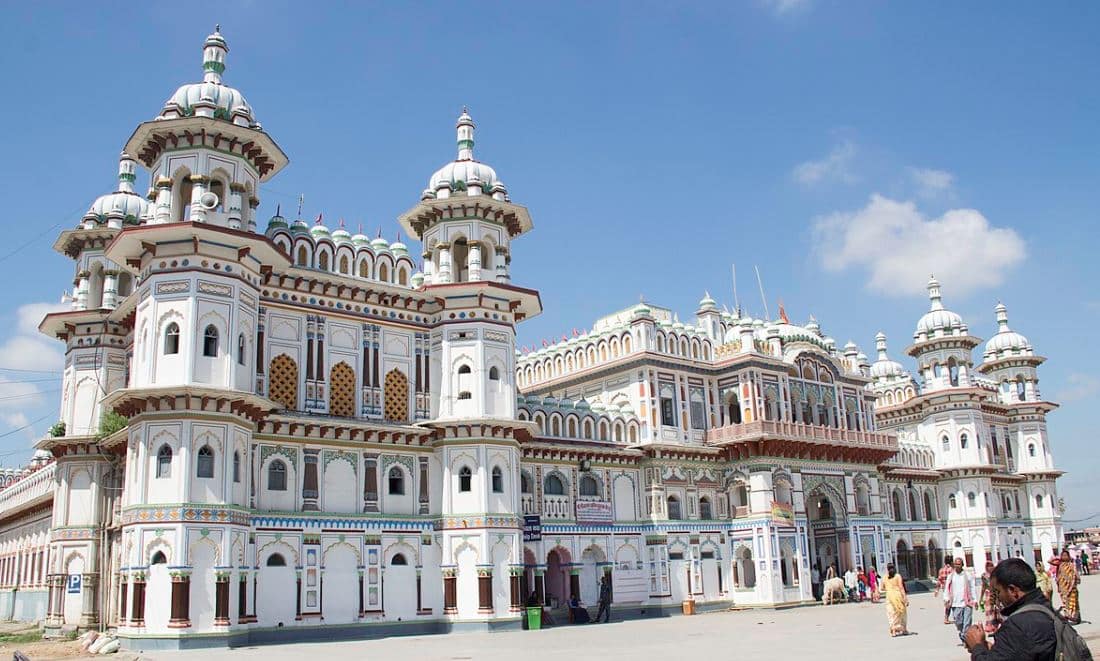
Janaki Mandir (Nau Lakha Mandir)
The most iconic landmark of Janakpur. This grand three-storey, 50-metre-high marble temple was completed in 1910 AD, commissioned by Queen Vrisha Bhanu of Tikamgarh (India) at the then-staggering cost of nine lakh (900,000) silver coins — hence its popular nickname 'Nau Lakha Mandir'. The architecture is a rare fusion of Rajput palace design and Mughal-style domes and arches. Inside, the complex houses 60 decorated rooms with intricate lattice windows and vivid paintings of scenes from the Ramayana. It stands on the sacred spot where a golden idol of Goddess Sita was discovered by the saint Shurkishordas in the 17th century.
 Temple
Ram Mandir
Situated a short walk southeast of the Janaki Mandir, the Ram Mandir is the oldest temple in Janakpur, built in the late 1700s by Amar Singh Thapa. Unlike the Janaki Mandir's marble grandeur, this temple features classic Nepali pagoda-style architecture with fine woodcarvings on the struts and doors. It becomes the spiritual epicentre of the city during Ram Navami (March/April), when thousands of devotees gather for prayers and processions.
 Sacred Pond
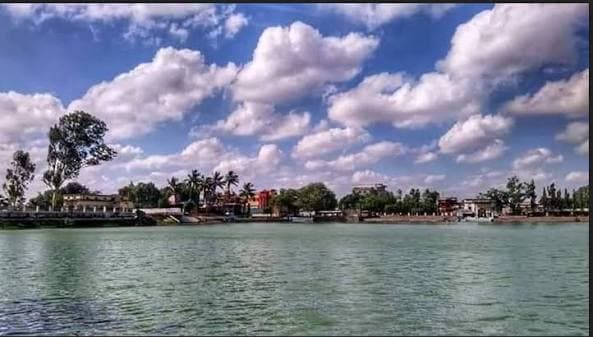
Ganga Sagar
Janakpur is known as the 'City of Ponds' — it has over 72 ancient water bodies. Ganga Sagar is the holiest among them. Local tradition holds that its waters were brought from the Seven Seas and other sacred rivers. Pilgrims and locals perform ritual bathing here, and every evening a mesmerising Ganga Aarti is conducted at sunset, reminiscent of the famous aartis at Varanasi. It is also a focal point during the Chhath festival.
 Sacred Pond
Dhanush Sagar
Located near the Ram Mandir, this pond is named after the divine bow (Dhanush) of Lord Shiva. According to the Ramayana, the bow was kept here for safekeeping by King Janak, and the pond was constructed in the shape of the weapon itself. Legend says the broken fragments of the bow fell here after Lord Ram snapped it during Sita's Swayamvar. It is especially popular for ritual bathing during the Chhath and Makar Sankranti festivals.
 Wedding Pavilion
Ram Sita Vivah Mandap
Adjacent to the Janaki Mandir stands this elegant marble pavilion, traditionally believed to mark the exact spot where Lord Ram and Goddess Sita were married. Inside, life-size idols depict the grand royal wedding ceremony. The site becomes the heart of the spectacular Vivah Panchami festival (November/December), when hundreds of thousands of pilgrims gather to re-enact the divine wedding in a vibrant procession through the city.
 Pond & Temple
Ratna Sagar & Ratna Sagar Temple
The name means 'Ocean of Jewels' — legend has it that King Janak stored his precious jewels near this sacred pond. The surrounding Ratna Sagar Temple features a distinctive dome-style structure dedicated to Lord Ram and Goddess Sita. Away from the bustle of the main tourist area, it offers a tranquil atmosphere perfect for quiet reflection and meditation.
Other Places Worth Visiting
Dhanushadham
This pilgrimage site houses the Dhanusha Temple, where it is believed the fossilised fragments of Lord Shiva's broken divine bow actually fell. A major local fair, the Makar Mela, is held here during Sundays in the month of Magh (January/February).
Jaleshwor Mahadev Temple
In the town of Jaleshwor, this unusual temple is unique because the Shiva Lingam sits about 20 feet below ground level and remains partially submerged in water year-round.
Old Janakpur Bazaar
Walk through the bustling narrow streets to sample daily life in the Terai. Try local street food like Bhaja (puffed rice tossed with mustard oil, salt, and chilli) and the famous Janakpur Peda, a creamy milk-based sweet.
Experience Mithila Art & Culture
The Mithila region is globally renowned for its distinctive folk art, commonly known as Madhubani painting. Traditionally, women painted intricate geometric and mythological designs on the freshly plastered mud walls of their homes to mark festivals like Deepawali, births, and weddings. The art typically features peacocks, fish, lotus flowers, and scenes from the Ramayana, rendered with natural dyes and bold outlines.
The best place to experience this tradition firsthand is the Janakpur Women's Development Center (JWDC), established in 1989. Located a short rickshaw ride from the city centre, the JWDC played a pioneering role in transitioning traditional wall murals onto paper, canvas, and handicrafts — enabling local women to earn independent livelihoods and gain international recognition. You can watch artisans at work and purchase authentic, fair-trade paintings, pottery, and mirrors directly from the creators.
What to Eat in Janakpur
Maithili cuisine is rich, flavourful, and largely vegetarian, built on rice, lentils, and fresh seasonal vegetables. Don't leave without trying these local specialities.
Dahi Chura
The quintessential Maithili breakfast — fresh curd (dahi) mixed with flattened rice (chura), often sweetened with jaggery. It holds deep cultural and ritual significance, especially during Makar Sankranti.
Litti Chokha
Roasted whole-wheat balls stuffed with spiced sattu (roasted gram flour), served dripping in ghee alongside chokha — a smoky mash of roasted aubergine, tomato, and potato. In Janakpur, it's often paired with a sour raw-mango chutney instead.
Thekua
A crunchy, deep-fried cookie of whole wheat flour, ghee, and jaggery, flavoured with cardamom and fennel seeds. It is also a sacred prasad (offering) during the Chhath Puja festival.
Peda
Janakpur's most famous sweet — soft, creamy milk-based confections slowly cooked with sugar and cardamom. You'll find them in almost every sweet shop in the old bazaar.
Makhana Kheer
A rich pudding made from makhana (fox nuts), which are cultivated abundantly in the Mithila plains. Slow-cooked in sweetened milk with nuts and saffron.
Best Time to Visit & Major Festivals
The ideal time to visit is during the cooler months from October to March. Summer (April–August) can be extremely hot and humid in the Terai — but if you don't mind the crowds, timing your visit around a major festival is unforgettable.
Vivah Panchami
The biggest event — the city celebrates the divine wedding anniversary of Ram and Sita with an elaborate, joyous procession through streets decorated with lights, flowers, and arches. Hundreds of thousands of pilgrims attend.
Ram Navami
Celebrates the birth of Lord Ram with massive gatherings, special prayers, and chanting at the Ram Mandir and Janaki Mandir.
Chhath Puja
A deeply moving sun-worshipping festival. Devotees stand in the waters of Ganga Sagar and Dhanush Sagar at sunrise and sunset, offering prayers and fruits to Surya Dev, the Sun God.
Makar Sankranti
Celebrated with Dahi Chura feasts, Til Ke Ladoo (sesame sweets), and bathing in the sacred ponds. The Makar Mela fair at Dhanushadham draws large crowds.
How to Reach Janakpur
Kathmandu (KTM) → Janakpur (JKR)
Buddha Air and Yeti Airlines operate daily. Airport is 1 km from city centre.
Kathmandu → Janakpur (via Kalanki Bus Park)
Day and overnight buses available. Distance: ~225 km.
Jaynagar (India) → Kurtha/Janakpur
Nepal's only cross-border broad-gauge railway. Scenic and affordable.
Bhithamore border (Sitamarhi, Bihar) → Janakpur
Taxi or shared auto available at the border crossing.
Getting Around
Within Janakpur, auto-rickshaws (tempos) and e-rickshaws are the most common mode of transport. Most major attractions — Janaki Mandir, Ram Mandir, Vivah Mandap, and the sacred ponds — are clustered within a walkable radius of about 1 km. For Dhanushadham (18 km away), you can hire a local taxi or join a shared van.
Practical Tips for Visitors
Carry Valid ID
Indian citizens need a Passport or Voter ID (with photo) to enter Nepal. Aadhaar cards are generally not accepted at immigration points.
Currency
The Nepali Rupee (NPR) is pegged at 1 INR = 1.6 NPR. Indian notes of ₹100 or below are widely accepted. ₹500 and ₹2000 notes are officially banned in Nepal — carry smaller denominations.
Dress Modestly
Cover shoulders and knees when entering temples. Remove footwear at the entrance.
Photography
Photos are allowed in temple courtyards but strictly prohibited inside the inner sanctums (Garbhagriha).
Water
Drink bottled water. The Terai heat can be intense — carry a reusable bottle and stay hydrated.
Language
Maithili is the primary local language. Hindi and Nepali are widely understood. Basic English is spoken at hotels and tourist-facing shops.
Ready to explore the spiritual heart of Nepal?
Book Your Stay at Hotel RamayanRight opposite the Janaki Mandir gates.